Lexington, SC · Lexington County
Hydrostatic Pressure Water Removal in Lexington, SCWet Subfloor Removal & Foundation Crack Water Infiltration
Hydrostatic Pressure Water Removal in Lexington covers groundwater intrusion mitigation, wet subfloor removal and crawl space water extraction.
Answered 24/7
Expert Hydrostatic Pressure Water Removal Serving Lexington, SC
Wet subfloor after a groundwater flood can ruin flooring and weaken joists. The moisture wicks up into walls, so the damage is often bigger than the flooded area.
In Lexington and nearby Red Bank, Oak Grove and Seven Oaks, soaked soil can push water into basements and crawl spaces. Local structural drying professionals extract the water and dry the structure.
Comprehensive Hydrostatic Pressure Water Removal Solutions
Wet Subfloor Removal
The process includes cutting out affected panels, disposing of them properly, and creating a dry, stable base for the new flooring material.
Foundation Crack Water Infiltration
Even hairline cracks can let in a lot of water when the soil is soaked. The water inside is removed, and sealing the crack is left to a foundation contractor.
Sump Pump Failure Cleanup
The cleanup process removes all water, cleans the pit, and ensures the area is dry before a new pump is installed or the existing one is repaired.
Slab Seepage Water Removal
Groundwater pushed up through a concrete slab can leave damp spots or a thin sheet of water. It is extracted and the slab and flooring are dried.
Basement Hydrostatic Pressure Flooding
When the soil around a basement is soaked, water pressure pushes water through the walls and floor. Local structural drying professionals pump it out and dry the basement before finishes and stored items are ruined.
Symptoms That Require Hydrostatic Pressure Water Removal
Sump Pump Running Constantly
A sump pump that runs nonstop means a lot of groundwater is coming in around the foundation.
Damp or Musty Odors in Basement
A constant musty smell in the lower level often means groundwater is getting in somewhere.
Spongy or Soft Spots on Floors
Damp spots or lifting flooring on a slab can mean water is coming up from below.
Pooling Water in Crawl Space
Standing water in a crawl space is a clear sign water is getting in and needs to be removed.
How Hydrostatic Pressure Water Removal Works in Lexington
Step 1: Emergency Water Extraction
The professionals use truck-mounted pumps to remove standing water from basements and crawl spaces.
Step 2: Foundation Leak Assessment
An inspection finds where groundwater is getting in and maps how far the water spread.
Step 3: Structural Drying Deployment
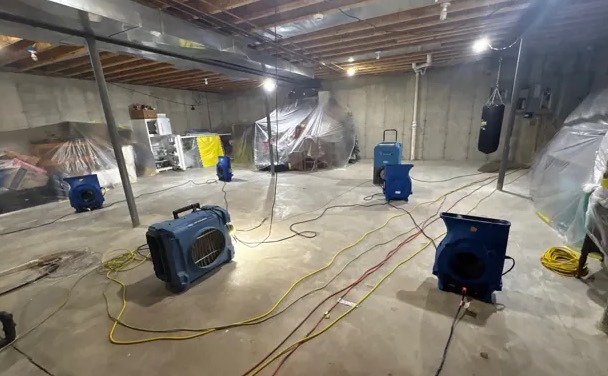
Industrial air movers and dehumidifiers are positioned strategically to dry wall cavities, subfloors, and structural members until readings return to normal.
Step 4: Final Moisture Verification
Professionals use moisture meters and sensors to confirm all materials are dry.
Sources Requiring Hydrostatic Pressure Water Removal
Heavy or Prolonged Rainfall
Long periods of rain soak the soil, and the water presses against the foundation until it finds a way in.
Soil Expansion and Contraction
Clay soil swells when wet, adding pressure on foundation walls and opening paths for water.
Improper Landscaping and Irrigation
Landscaping that slopes toward the house, or heavy watering near it, adds water to the soil against the foundation.
Failed or Missing Waterproofing
Worn exterior coatings or membranes let groundwater reach the foundation wall directly.
Residential and Commercial Hydrostatic Pressure Water Removal in Lexington
Residential Hydrostatic Pressure Water Removal
Persistent basement flooding from hydrostatic pressure can ruin furnaces, water heaters and stored items. The professionals dry the structure fully to prevent further damage.
Commercial Hydrostatic Pressure Water Removal
In multi-tenant buildings, groundwater cleanup has to be planned around other businesses. The pros coordinate access and drying to limit disruption.
Professional Hydrostatic Pressure Water Removal or DIY Cleanup in Lexington
Checking known foundation cracks for changes in width or new moisture is a reasonable DIY task. If water starts flowing through any crack, stop monitoring and call for water removal and repair right away.
What Influences Hydrostatic Pressure Water Removal Costs in Lexington
The cost of hydrostatic pressure water removal in Lexington depends on how much of the lower level flooded and how much water came in.
Equipment Needs
Large pumps and industrial dehumidifiers for big jobs add to the equipment cost.
Mitigation Measures
Drainage or waterproofing work to stop water from returning is a separate cost from the water removal.
Affected Area Size
Larger flooded areas or large wet subfloors need more equipment and more days of drying.
Does Insurance Cover Hydrostatic Pressure Water Removal?
Groundwater cleanup may be covered if the event was sudden and accidental under your policy. The pros gather photos and readings for your insurer, who decides coverage.
Advantages of Hiring Local Pros for Hydrostatic Pressure Water Removal in Lexington
Comprehensive Moisture Mapping
Moisture meters find water in subfloors and walls so every wet area gets dried.
Focused Mitigation Planning
You get notes on where water came in, so you can plan drainage work with a contractor.
IICRC-Standard Drying Methods
Drying the structure fully after water intrusion protects the foundation and framing from lasting damage.
Urgent Hydrostatic Pressure Water Removal for Lexington Homes
Drying after groundwater gets in starts with a call to (803) 941-5983. The professionals are available 24/7 in Lexington to remove the water and set up drying.
Call Now (803) 941-5983Areas Served for Hydrostatic Pressure Water Removal Near Lexington
Groundwater cleanup and wet subfloor removal are available for properties in Lexington and neighboring locations such as Red Bank, Oak Grove and Seven Oaks.
- Hydrostatic Pressure Water Removal in Red Bank
- Hydrostatic Pressure Water Removal in Oak Grove
- Hydrostatic Pressure Water Removal in Seven Oaks
- Hydrostatic Pressure Water Removal in Irmo
- Hydrostatic Pressure Water Removal in Cayce
- Hydrostatic Pressure Water Removal in West Columbia
- Hydrostatic Pressure Water Removal in Gilbert
- Hydrostatic Pressure Water Removal in Gaston
- Emergency Damage Restoration in 29071
- Storm Damage Restoration in 29071
- Water Damage Restoration in 29071
- Water Extraction Service in 29071
- Water Leak Detection in 29071
- Water Removal Service in 29071
- Emergency Damage Restoration in 29072
- Storm Damage Restoration in 29072
Hydrostatic Pressure Water Removal in Lexington: Your Questions
What equipment is used for groundwater extraction?
Groundwater extraction uses submersible pumps for deep water, wet-dry vacuums for shallow flooding, and specialized extractors for under-slab water removal.
When is wet subfloor removal necessary?
When wood subflooring is so soaked that it cannot be dried, it is removed to prevent rot and a weak floor.
Will drying stop water from coming back?
No. Drying fixes the damage that is already there. Keeping water out takes drainage, grading or waterproofing work by a contractor.
Why does sump pump failure cause flooding?
A sump pump collects groundwater and pumps it out. When it fails, that water has nowhere to go and builds up in the lower level.
Why is subfloor drying services important after flooding?
Drying the subfloor keeps it from rotting and growing mold, which protects the floor system above it.