Great Falls, SC · Chester County
Basement Water Damage Restoration in Great Falls, SCEmergency Basement Flood Cleanup & Basement Water Extraction
Get basement water damage restoration in Great Falls for basement floor water removal, basement mold prevention and basement drying services.
Answered 24/7
Expert Basement Water Damage Restoration Serving Great Falls
Water in a basement does not stay on the floor. It wicks up drywall, soaks insulation and seeps into wood framing. In Great Falls, a few inches of water can damage walls up to two feet high.
A finished basement or lower level in Great Falls or Fort Lawn, Richburg and Lancaster can hide old moisture behind drywall and flooring. The pros find the water and dry the space before more damage sets in.
Complete Basement Water Damage Restoration for Great Falls
Emergency Basement Flood Cleanup
Emergency cleanup starts with stopping the source where possible, checking for electrical hazards and pumping out the water.
Basement Water Extraction
Submersible pumps remove deep standing water, then portable extractors pull water from carpet, pad and the concrete floor.
Basement Floor Water Removal
A slab can look dry on top while still holding water. Moisture readings show when it is ready for new flooring.
Basement Sewer Backup Cleanup
Porous materials touched by sewage, such as carpet, pad and lower drywall, are removed. Concrete and framing are cleaned and disinfected.
Basement Dehumidification
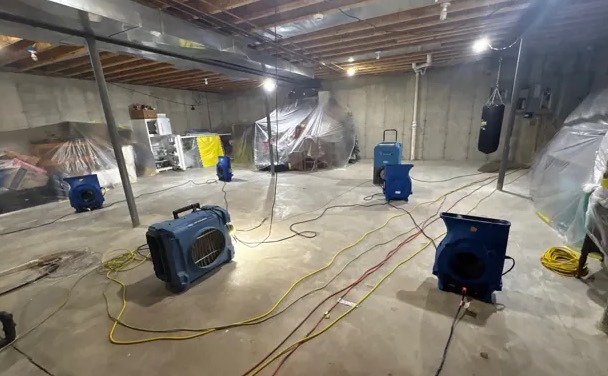
Large dehumidifiers pull moisture from the basement air so walls, framing and the slab can release their water.
How to Know You Need Basement Water Damage Restoration in Great Falls
Wet or Stained Basement Walls
Dark, wet patches or tide lines on basement walls show where water seeped in or wicked up.
Sump Pump Failure or Overflow
A sump pump that runs constantly, fails to start or lets the pit overflow puts the basement at risk.
Mold on Surfaces
Dark spots on drywall, framing or stored boxes mean the area has stayed wet for days.
Damp or Musty Odors
A damp, earthy or musty smell in the basement often means hidden moisture in walls, carpet or the slab.
How Basement Water Damage Restoration Works in Great Falls
Step 1: Floodwater Pump-Out
Submersible pumps remove deep water, and electrical hazards are checked before anyone walks in it.
Step 2: Deep Moisture Extraction
Extractors pull water from carpet, pad and the concrete floor after the deep water is gone.
Step 3: Air Circulation and Drying
Air movers keep dry air moving across walls and floors throughout the basement.
Step 4: Dehumidification and Verification
Dehumidifiers run until humidity and material readings confirm the basement is dry.
Frequent Sources of Water Damage in Great Falls
HVAC Condensate Line Overflow
A clogged furnace or air conditioner condensate line can overflow onto the floor of a basement or lower-level utility room.
Window Well Flooding
Window wells without drains or covers fill with rain and leak through basement windows.
Sewer Line Backups
A blocked or overloaded sewer line pushes wastewater up through basement drains and toilets.
Faulty Basement Waterproofing
Old or failed waterproofing on foundation walls lets water through during wet weather.
Home and Business Basement Water Damage Restoration in Great Falls
Residential Basement Water Damage Restoration
Finished basements used as living space need carpet, pad and lower drywall checked carefully. Soaked materials are removed so the walls and slab can dry.
Commercial Basement Water Damage Restoration
Businesses with below-grade storage need inventory moved out of the water quickly. Wet stock is separated and documented for insurance.
When to DIY and When to Call the Pros for Basement Water Damage Restoration
Do not walk into standing basement water if outlets, cords or appliances are submerged. Shut off power at the panel if you can reach it safely, then call (803) 941-5983.
Cost Considerations for Basement Water Damage Restoration in Great Falls
Before pricing basement water damage restoration in Great Falls, the pros check the water depth, the type of water and what the basement is finished with.
Drying Time Required
Basements dry slowly, and longer drying means more equipment days and monitoring visits.
Dehumidification Needs
Large dehumidifiers may need to run longer in below-grade spaces than in upper floors.
Secondary Damage
Damage to furnaces, water heaters and belongings adds repair and replacement costs.
Does Insurance Cover Basement Water Damage Restoration?
Many homeowner policies cover sudden basement water from a burst pipe, but not seepage or groundwater. Sewer backup coverage is often a separate add-on, so check your policy.
Benefits of Local Pros for Basement Water Damage Restoration in Great Falls
Water Type Handling
Clean water, gray water and sewage are each handled with the right protection and removal steps.
Industry Drying Standards
Drying follows industry water damage standards, with readings taken at every visit.
Water Extraction First
Water is removed from floors, carpet and pad before drying starts, which shortens drying time.
Round-the-Clock Emergency Basement Water Damage Restoration in Great Falls
Sewage coming up through a floor drain? Stop using water in the house and call (803) 941-5983 now for basement water damage restoration in Great Falls.
Call Now (803) 941-5983Local Basement Water Damage Restoration Coverage: Great Falls and Beyond
Need basement water damage restoration outside Great Falls? Service also covers Fort Lawn, Richburg and Lancaster, including emergency help during storms.
- Basement Water Damage Restoration in Fort Lawn
- Basement Water Damage Restoration in Richburg
- Basement Water Damage Restoration in Lancaster
- Basement Water Damage Restoration in Heath Springs
- Basement Water Damage Restoration in Winnsboro
- Basement Water Damage Restoration in Ridgeway
- Basement Water Damage Restoration in Chester
- Basement Water Damage Restoration in Kershaw
- Emergency Damage Restoration in 29055
- Storm Damage Restoration in 29055
- Water Damage Restoration in 29055
- Water Extraction Service in 29055
- Water Leak Detection in 29055
- Water Removal Service in 29055
FAQ for Basement Water Damage Restoration in Great Falls
What is involved in basement water damage restoration?
Pumping out water, removing soaked materials, cleaning contaminated areas, drying walls, framing and concrete, and dehumidifying until readings are normal.
Why is quick action important for below-grade flood restoration?
Basements dry slowly, so every hour of standing water adds days of drying and more material to replace.
Should I try below-grade waterproofing myself after flooding?
Sealing a small crack can be a DIY job, but drying must come first, and larger waterproofing work should go to a contractor.
What health risks come with delayed basement flood cleanup?
Standing water and wet materials can support bacteria and microbial growth, and sewage carries contaminants that need disinfection.
What does below-grade moisture removal include beyond pumping?
Extracting carpet and pad, opening wet walls, running air movers and dehumidifiers, and checking readings until dry.