Cross Anchor, SC · Spartanburg County
Basement Water Removal in Cross Anchor, SCSump Pump Failure Water Cleanup & Basement Dehumidification
After a burst pipe or storm, Basement Water Removal in Cross Anchor means basement water pump out, basement wall drying and basement drying services.
Answered 24/7
Basement Water Removal Solutions for Cross Anchor Homeowners
In Cross Anchor homes with a basement or below-grade room, water usually comes from storms, sewer backups or plumbing leaks overhead. The source decides how the water is handled and what can be saved.
A single storm or burst pipe in Cross Anchor can flood a basement. Local basement drying experts serve Cross Anchor and nearby Enoree, Buffalo and Clinton, with help available around the clock.
The Basement Water Removal Process in Cross Anchor
Sump Pump Failure Water Cleanup
When a sump pump stops, groundwater spreads across the floor. The water is pumped out and the floor and lower walls are extracted.
Basement Dehumidification
After drying, a household dehumidifier may still be needed to keep basement humidity in a healthy range.
Basement Floor Water Damage
Flooring that buckled or swelled is removed. Tile and sealed concrete can often be cleaned and dried in place.
Basement Wall Drying
Opening the bottom of finished walls lets air reach the studs and sill plate, which otherwise stay wet behind the drywall.
Basement Water Pump Out
Pumping starts once power to the basement is safe. Deep water goes first, then extractors handle the thin layer left on the floor.
Common Symptoms Requiring Basement Water Removal
Warped or Buckling Flooring
Flooring that buckles, lifts or feels spongy has water trapped between it and the slab.
Musty Odors and Mold Smell
A musty or damp smell in the basement points to wet materials hidden somewhere in the space.
Wet or Damp Basement Walls
Basement walls that look dark, feel damp or show tide lines are taking on or holding water.
Sump Pump Failure or Overflow
A sump pit that is full, overflowing or has a pump that will not start means water is about to spread.
How Basement Water Removal Works in Cross Anchor
Step 1: Source Control and Water Pump Out
The leak is shut off and standing water is pumped out, starting at the lowest point.
Step 2: Water Extraction
Extractors pull water from carpet, pad and concrete, and wet vacs clear corners and stairs.
Step 3: Dehumidification and Drying
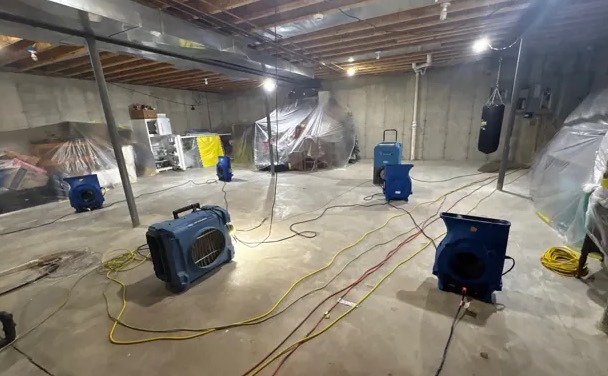
Large dehumidifiers and air movers dry walls, framing and slab over several days.
Step 4: Inspection and Clearance for Repair
Final readings confirm the basement is dry and ready for drywall and flooring repairs.
Common Causes of Basement Water Damage in Cross Anchor
Appliance Malfunctions and Overflows
Washers, utility sinks and water softeners in the basement can overflow or leak.
High Water Table and Hydrostatic Pressure
A high water table presses groundwater against the slab and walls, forcing it inside.
Clogged or Damaged Gutters
Clogged gutters and short downspouts dump roof water right next to the foundation.
Window Well Leaks and Drainage
Window wells without drains or covers fill with rain and leak through the windows.
Residential and Commercial Basement Water Removal in Cross Anchor
Residential Basement Water Removal
Older homes with a basement may see seepage with every heavy storm. Water removal handles the current damage, and the entry point is noted for a waterproofing contractor.
Commercial Basement Water Removal
Multi-unit buildings with shared basements need each storage and laundry area pumped, dried and documented for the property manager.
Basement Water Removal vs. DIY: When to Call the Pros
You can move belongings up off the floor and run the dehumidifier you already own. Drying soaked walls and slab needs larger equipment and readings to confirm the job is done.
Understanding Basement Water Removal Pricing
Waterproofing and drainage work are separate costs. In Cross Anchor, they may be needed to stop the next flood.
Time of Service
Night, weekend and storm calls can cost more than a scheduled weekday visit.
Affected Materials
Finished walls, carpet and laminate take more removal work than bare concrete.
Basement Square Footage
Larger basements need more extraction, more drying equipment and more days of drying.
Does Insurance Cover Basement Water Removal?
Ask your adjuster early how your policy treats seepage and sewer backups, since many policies limit or exclude both kinds of water.
Why Choose Local Pros for Basement Water Removal in Cross Anchor
Detailed Damage Documentation
Photos, readings and drying logs are kept to support your insurance claim.
Focus on Drying Outcomes
Drying continues until readings are normal, not just until surfaces look dry.
Contamination Safety Protocols
Sewage and dirty water are handled with protective gear, containment and disinfection.
Emergency Basement Water Removal Available 24/7
Storm night, weekend or holiday, local basement drying experts handle basement water in Cross Anchor. Call (803) 941-5983 to get pumps running and drying started.
Call Now (803) 941-5983Communities Served for Basement Water Removal
Nearby areas served for basement water removal include Enoree, Buffalo and Clinton, with the same pumping and drying steps used in Cross Anchor.
- Basement Water Removal in Enoree
- Basement Water Removal in Buffalo
- Basement Water Removal in Clinton
- Basement Water Removal in Woodruff
- Basement Water Removal in Laurens
- Basement Water Removal in Monarch Mill
- Basement Water Removal in Union
- Basement Water Removal in Gray Court
- Emergency Damage Restoration in 29331
- Storm Damage Restoration in 29331
- Water Damage Restoration in 29331
- Water Extraction Service in 29331
- Water Leak Detection in 29331
- Water Removal Service in 29331
Frequently Asked Basement Water Removal Questions
How long does basement drying take?
Often several days or longer, because concrete and cool basement air hold moisture. Daily readings show when it is done.
What should I do right after basement flooding?
Make power safe, avoid sewage, move belongings above the water, take photos and call for water removal.
Why is basement dehumidification important after pumping?
Walls and concrete keep releasing moisture for days. Dehumidifiers remove it so the basement does not stay damp.
What is involved in basement leak cleanup?
Stopping the leak, extracting the water, drying the floor and walls and checking for hidden moisture under flooring.
How is basement wall drying done?
Wet drywall is cut back, insulation removed and directed airflow and dehumidifiers dry the studs and masonry.